Projects
Online bookings and scheduling
A customer books from the marketplace, picks a time, and the job lands in the dispatcher’s queue. Accept it and it moves onto the calendar, where jobs are rescheduled by dragging them to a new slot and stay where you put them. The calendar is the spine of the platform. Quotes, stock and technician assignments all read from it, so a change made here shows up everywhere else without anyone re-entering it.
Stock and scheduling, one system
Products are reserved against jobs that haven’t happened yet, so the system knows a van will be short before the technician does. A job tomorrow needs a fan belt that isn’t on the van, the calendar flags it, and a van-to-van transfer clears it in a few seconds. The wider stock system covers warehouse inventory, supplier sync and reordering off lead times. This clip is the part that touches scheduling, which is where it matters most day to day.
Quotes that become jobs
Build a quote from the service catalogue and the totals update as lines change. Send a revision and the client sees it. Accept it and the job goes straight onto the calendar with the technician assigned, no re-entry, and stock reserved against it from that moment.
Services, packages and parts
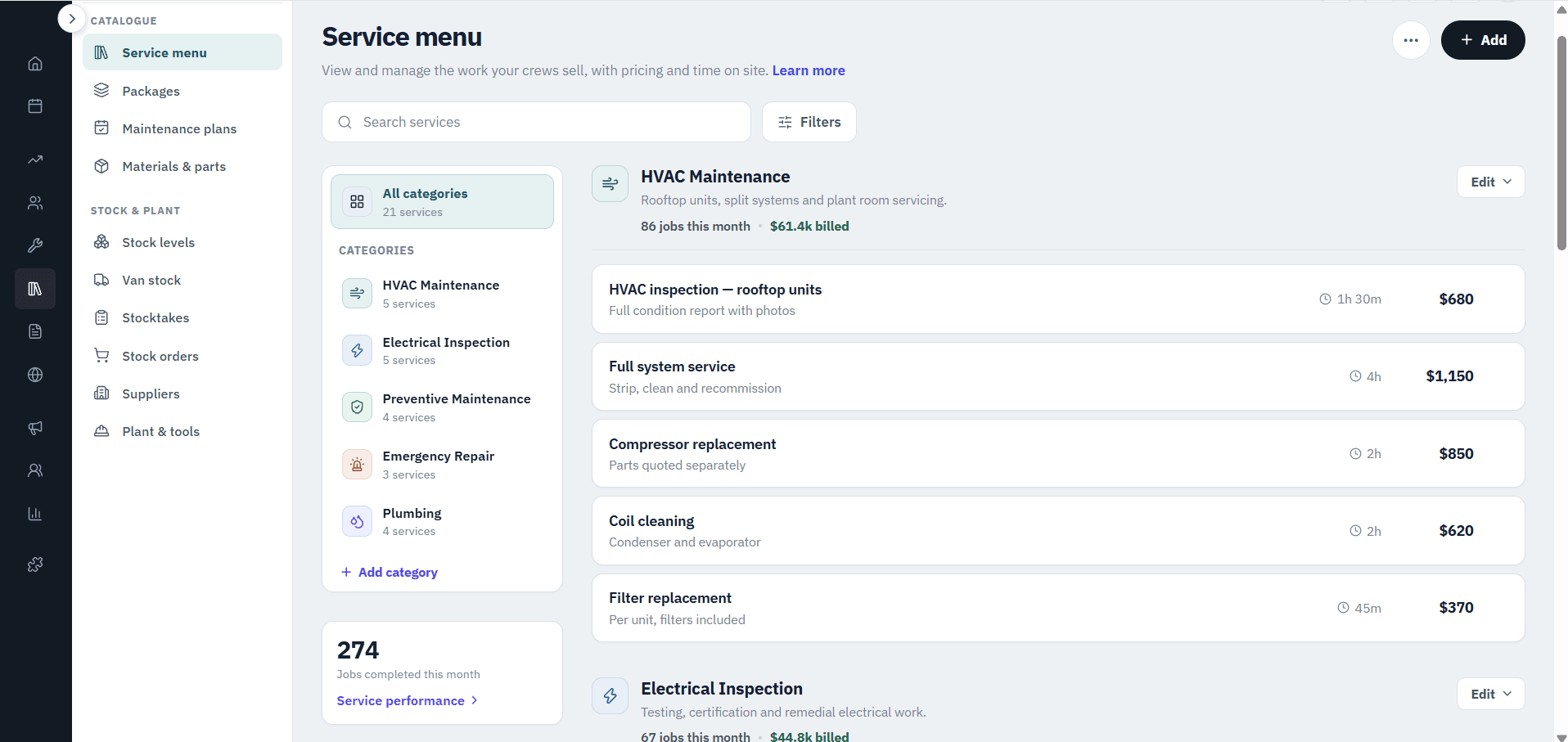
Services, packages, maintenance plans and the materials each one consumes, all defined in one place. That definition is what everything else reads from: a quote prices off it, a booking pulls parts off it, and stock reserves against it. The side navigation shows the rest of the stock system, covering stock levels, van stock, stock takes, orders, suppliers, and plant and tools.
Marketing and customer messaging
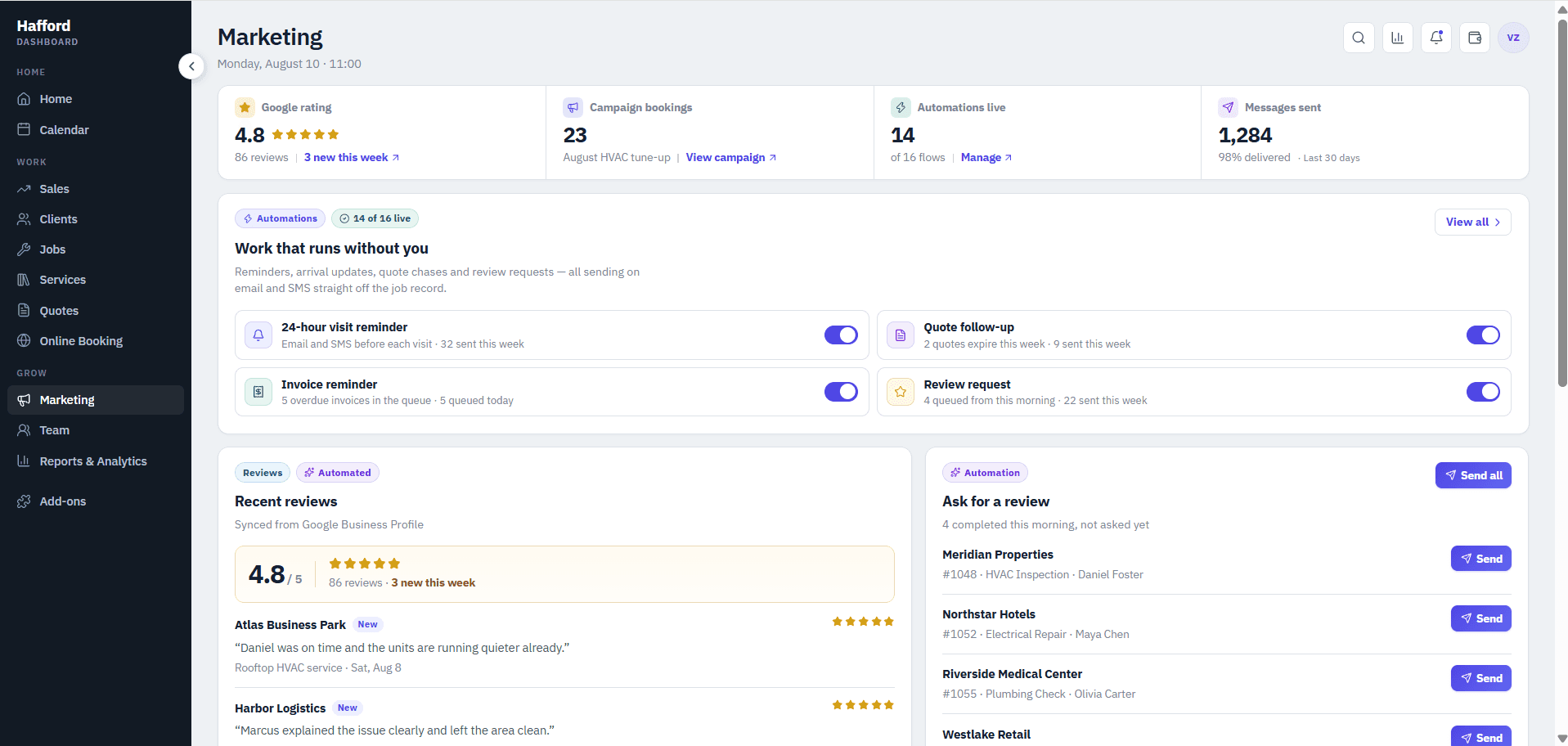
Blast campaigns, automated reminders, and follow-ups that chase unpaid invoices and unanswered quotes without anyone remembering to send them. Google reviews come back into the platform. Twilio handles the messaging and Stripe the payments, both wired in properly rather than linked out to.
Reports that point at something
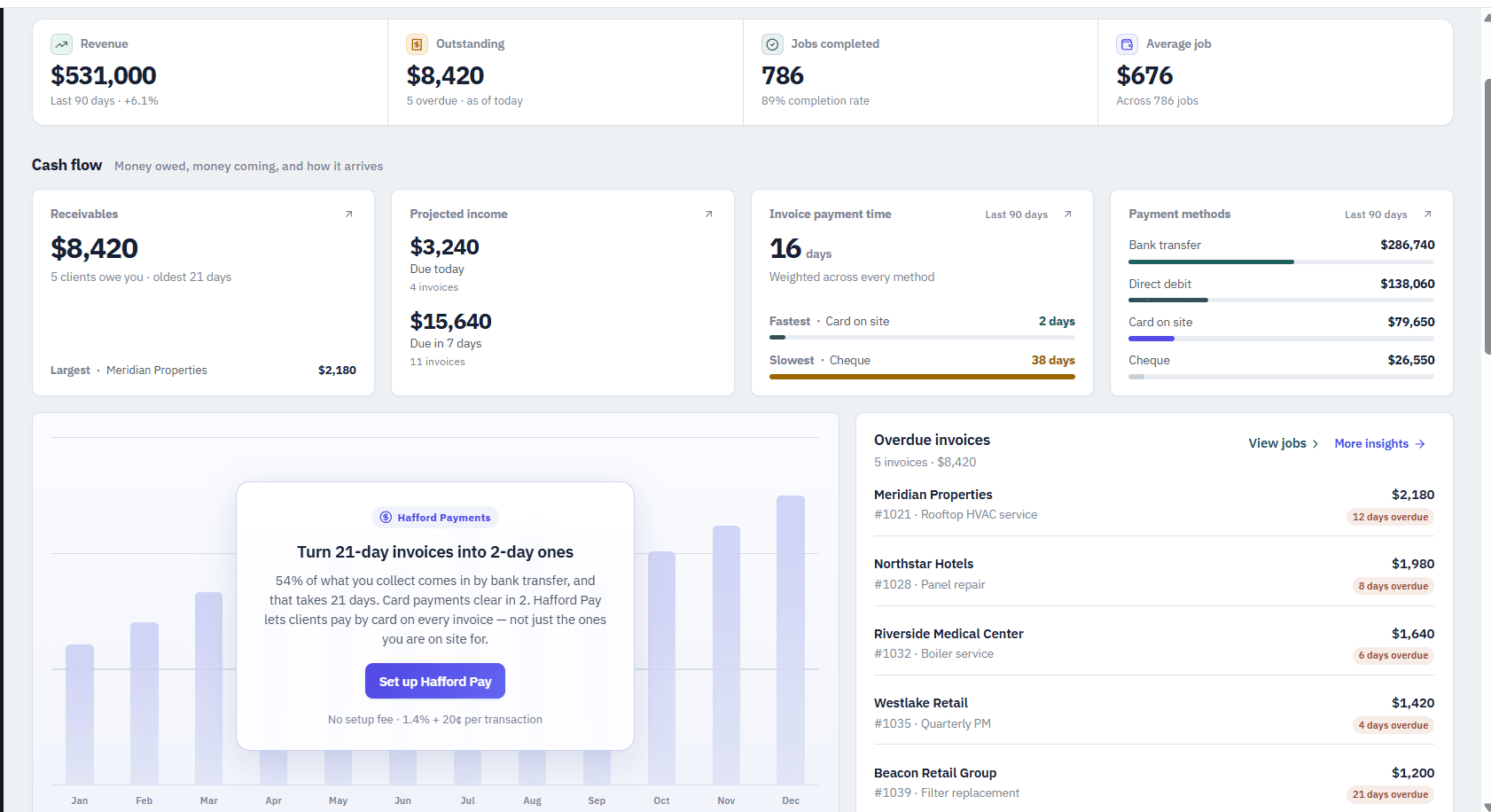
Revenue, jobs, technicians and payment mix, reported off the same data the rest of the platform runs on. The panel here reads the actual payment split and works out what it costs: over half of collections arrive by bank transfer and take 21 days, against 2 days on card.
All six of these are one system, built by the same team.
If there’s a piece of your product that needs building like this, tell us about it.